
Starblock
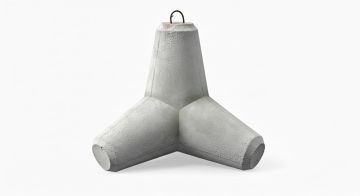
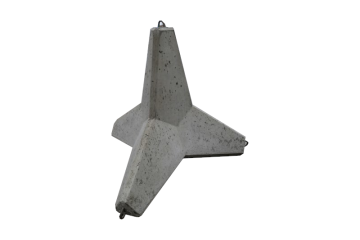
Starblok Concrete Barriers – Uncompromising Public Security
In an era of increasing security demands for public spaces, Starblok concrete barriers are at the forefront of physical anti-terror protection and perimeter defense. Their unique multi-arm design ensures that upon vehicle impact, the barrier wedges into the undercarriage, effectively stopping even heavy delivery trucks. The Sorfan brand offers two reliable variants of these heavy-duty roadblocks, guaranteeing peace of mind for event organizers and attendees alike.
Due to their massive weight, these concrete blocks do not require permanent ground anchoring, making them a non-invasive security solution for urban infrastructure. They are highly resistant to mechanical damage and extreme weather conditions, serving as an impassable obstacle during outdoor festivals, Christmas markets, and on pedestrian promenades.
Key Advantages of Starblok Roadblocks
Choosing Starblok means investing in the highest standard of passive security. Key benefits include:
- Maximum Stopping Power: The star shape absorbs impact energy and immobilizes hostile vehicles instantly.
- Surface Preservation: Deployed directly onto asphalt, paving, or concrete without drilling.
- Urban Aesthetics: The raw, geometric concrete design fits perfectly with modern city landscapes.
- Traffic Calming Chicanes: Offset placement forces authorized vehicles to drastically reduce their speed.
Where are Starblok barriers best utilized?
These concrete elements are the premier choice for securing mass outdoor events, fan zones, and concerts. They also serve as highly effective temporary or permanent protection for critical infrastructure, embassies, airports, and entrances to busy pedestrian areas and historic town squares.
Expert Opinion - How to deploy Starbloks correctly?
For Starblok barriers to provide true anti-terror protection, correct spacing is critical. I recommend placing them no more than 1.2 meters apart. This distance makes it impossible for a passenger car to squeeze through, while still allowing free passage for pedestrians, wheelchairs, and strollers. If access for emergency services is required, arrange the blocks in an offset chicane formation.
FAQ – Frequently Asked Questions about Starblok Barriers
How are these barriers transported and placed?
Due to the immense weight of the individual units, transporting and installing Starblok barriers requires heavy machinery. Crane trucks (HIAB), loaders, or heavy-duty forklifts equipped with appropriate lifting slings or chains are used for loading and precise placement on site.
Does the concrete degrade in winter?
No. The barriers we offer are manufactured from specialized high-strength vibrated concrete, which is fully frost-resistant and has low water absorption. They easily withstand repeated freeze-thaw cycles and direct contact with de-icing road salt.
Can Starbloks be permanently anchored to the ground?
The design philosophy of the Starblok relies on acting as a massive physical ballast, which is why anchoring is not typically required. Moving them by hand is impossible, and upon impact, the block wedges beneath the vehicle, destroying its chassis—a method far more effective than rigid anchoring that could simply snap off.
Can they be interlocked to form a solid wall?
While usually placed in a line with gaps, their geometric structure allows the elements to interlock with one another. In high-risk scenarios, this enables a denser deployment, completely blocking off wider roads and denying any vehicle access entirely.