
Traffic Cones 1000 mm
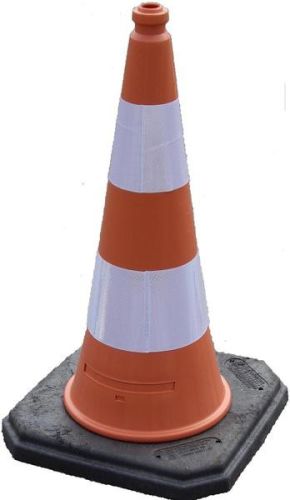

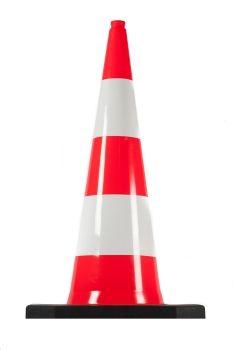
Traffic cones 900 and 1000 mm – the highest level of safety
Traffic cones with a height of 900 mm and 1000 mm (1 meter) are the largest and most massive warning solutions available on the market. They are designed to work in extreme road conditions, offering maximum visibility from vast distances. In the Sorfan assortment, you will find top-class heavy-duty cones that provide indispensable protection on motorways, airports, and in heavy industry.
Thanks to their extraordinary size, one-meter traffic cones instantly capture drivers' attention. Equipped with wide bands of high-generation reflective foil, they guarantee flawless detection of hazards even in dense fog, heavy rain, and the darkest nights. Their weight, often reaching several kilograms due to a heavy recycled base, provides them with unwavering stability.
Advantages of the tallest 900 and 1000 mm cones
Investing in 90 and 100 cm cones is a step towards uncompromising safety. Their main advantages are:
- Massive stability: An extremely weighted base ensures the cone withstands gusty winds and drafts generated by passing heavy goods vehicles.
- Absolute visibility: A height of 1 meter puts the cone directly in the driver's line of sight, often towering over passenger car hoods.
- Damage resistance: Constructions made of flexible PVC or durable rubber absorb impacts, minimizing vehicle damage upon accidental collision.
- Norm compliance: Perfect for securing highway works in accordance with strict traffic management regulations.
Application: Where are one-meter cones necessary?
These massive warning cones are used where standard sizes fail. They are a key element in cordoning off lanes on motorways and expressways. They perform perfectly during the escorting of abnormal loads, on vast construction sites, in mines, and on airport aprons, where they mark safe taxiing routes for aircraft.
Expert opinion - what to look for when choosing?
When buying cones with a height of 90-100 cm, the deciding factor must be the ratio of the base weight to the total height of the cone. Because of its large side surface area, a 100 cm cone acts like a sail. Therefore, you must choose models with a heavy, wide foot (often weighing 5-7 kg). For motorways, be sure to look for models equipped with certified Class II reflective foil, which will provide adequate reaction time for drivers traveling at 140 km/h.
FAQ – Frequently asked questions about 90 and 100 cm cones
Can such large cones be transported in a passenger car?
Transporting them in a standard passenger car can be problematic due to their dimensions. Fortunately, 90 and 100 cm cones are designed to be stackable. By placing one inside the other, they can be safely transported on trailers, in delivery vans, and on truck trailers, while maintaining order and saving space.
Do one-meter cones mean a higher risk of vehicle damage in a collision?
Not necessarily. Although large and heavy, professional 100 cm cones are molded from highly flexible PVC or special rubber compounds. In the event of a direct hit, the cone body bends or lays flat on the asphalt, usually causing no drastic damage to the bodywork (unlike rigid concrete barriers).
Why is the base weight so important for 100 cm cones?
A 1-meter tall cone has a large surface area for the wind to press against. If the base were too light, the air blast from overtaking trucks on the highway would instantly knock it over. A massive recycled base (often weighing over 5 kg) effectively shifts the center of gravity towards the ground, guaranteeing full stability.
Do I need 100 cm cones for urban roadworks?
As a rule, 50 cm or 75 cm cones are sufficient in built-up areas. Cones with a height of 90 and 100 cm are dedicated primarily to high-speed zones (motorways, expressways), airports, and heavy industry zones, where vehicles have very long braking distances and the driver must spot the barrier much earlier.